Milk, Dairy and Grain Market Commentary
By Sarina Sharp, Daily Dairy Report
Grain Markets
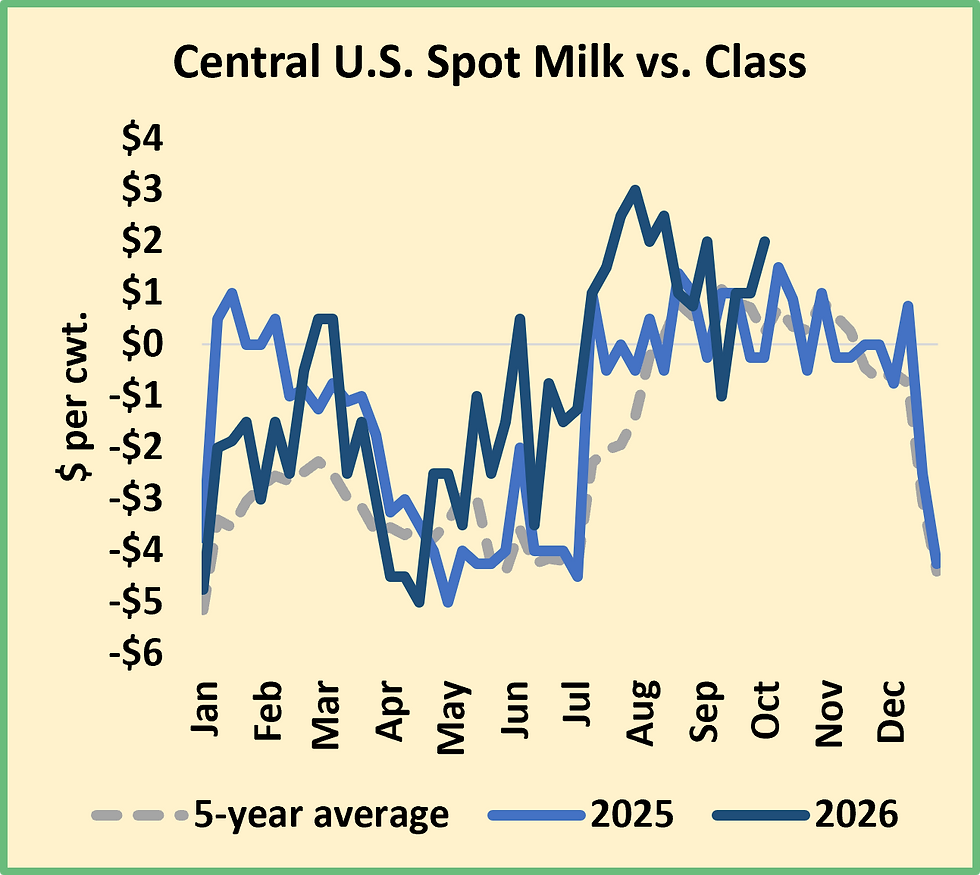
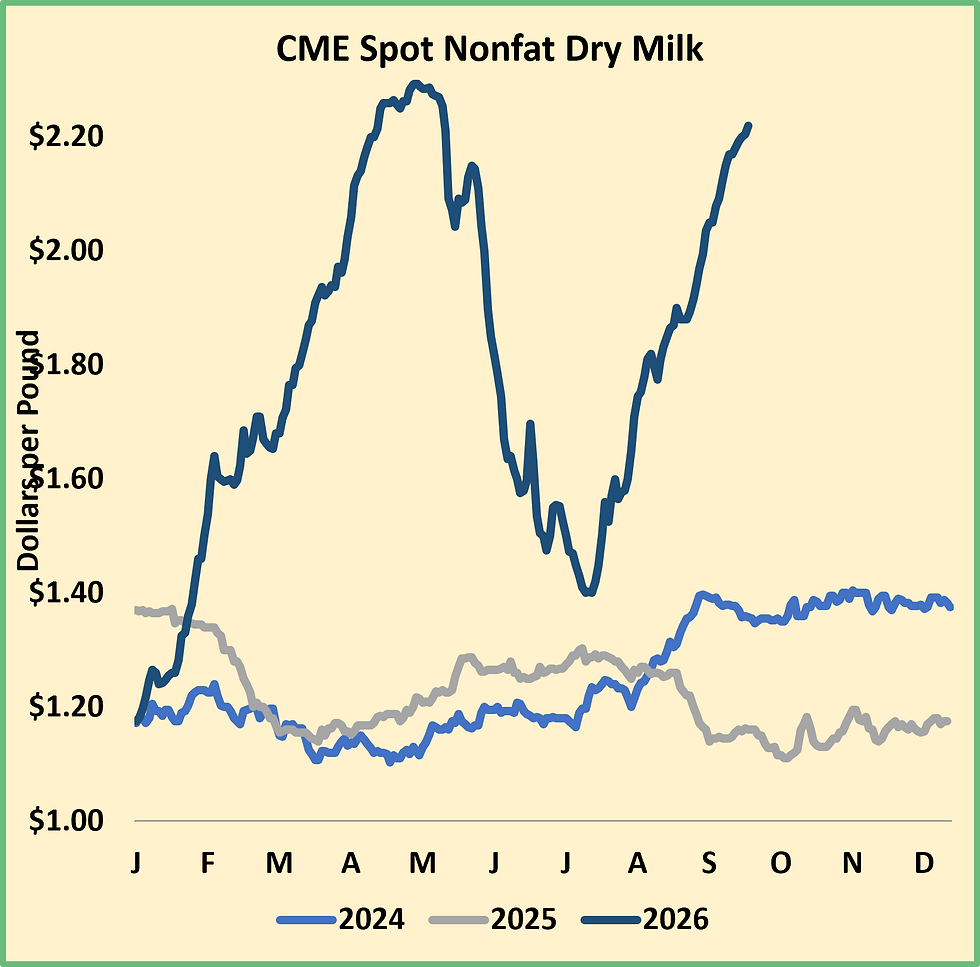
The dairy markets continue to diverge. Strong demand for proteins is lifting powder values. This week, CME spot whey powder gained another 2ȼ and reached 82.5ȼ per pound, a fresh 4.5-year high. Spot nonfat dry milk added a nickel, climbing to $2.22, just 7.5ȼ below the all-time high reached this spring. Asian buyers are eager to import U.S. whey powder, propping up prices despite robust production. For NDM, both domestic and international demand are strong, while production remains restrained. Other dairy processors are lapping up much of the milk supply, spot milk prices are rising, and dryers are running light in the Southwest. U.S. milk powder exports to Mexico are formidable. Meanwhile, Chinese milk powder supplies are starting to feel tight, potentially boosting China’s appetites for imports. Skim milk powder prices moved upward at this week’s GDT Pulse auction.
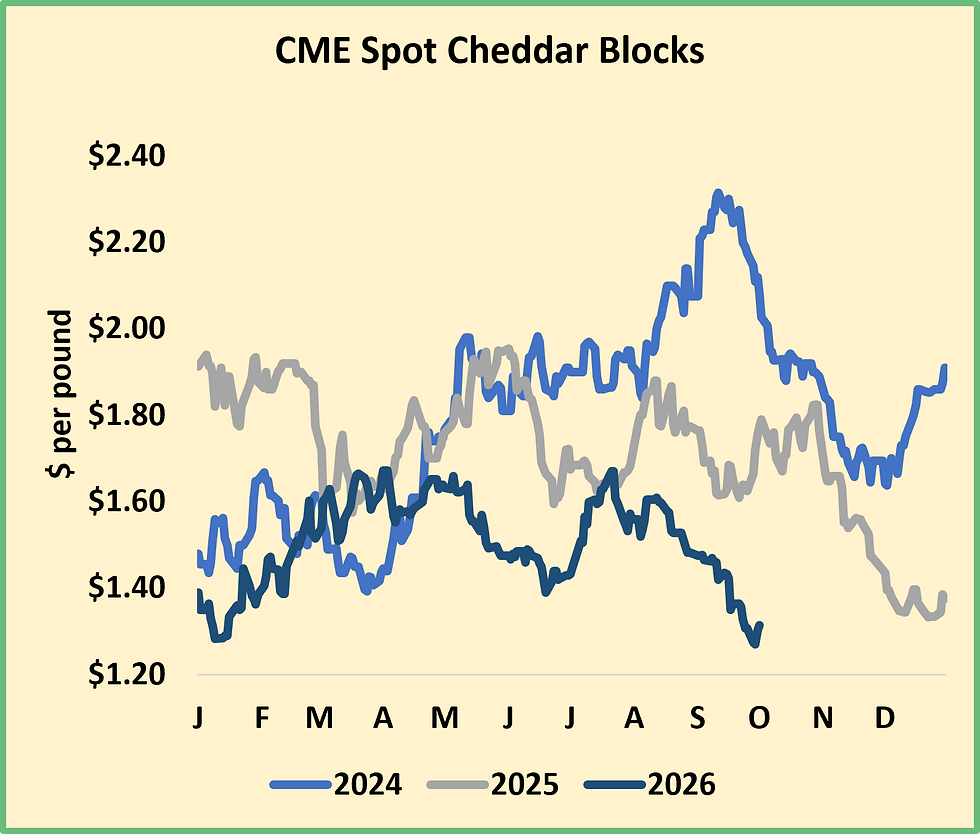
In contrast, cheese and butter are in a slump. On Wednesday, CME spot Cheddar blocks fell to $1.27, their lowest price since May 2020, during the darkest days of the pandemic shutdowns. That was low enough, apparently. Blocks finished today at $1.315, up 0.75ȼ from last Friday. Cheese is inordinately cheap, and exporters suggest that additional declines won’t win much new business. Bargain shoppers are already buying U.S. cheese at a record-smashing pace, and they simply don’t need more. But perhaps the latest selloff will prompt domestic buyers – including restaurants and grocers – to feature cheese and boost demand at the margins. Spot butter fell another 6ȼ this week to $1.34. Butter demand is strong, but production is stronger.
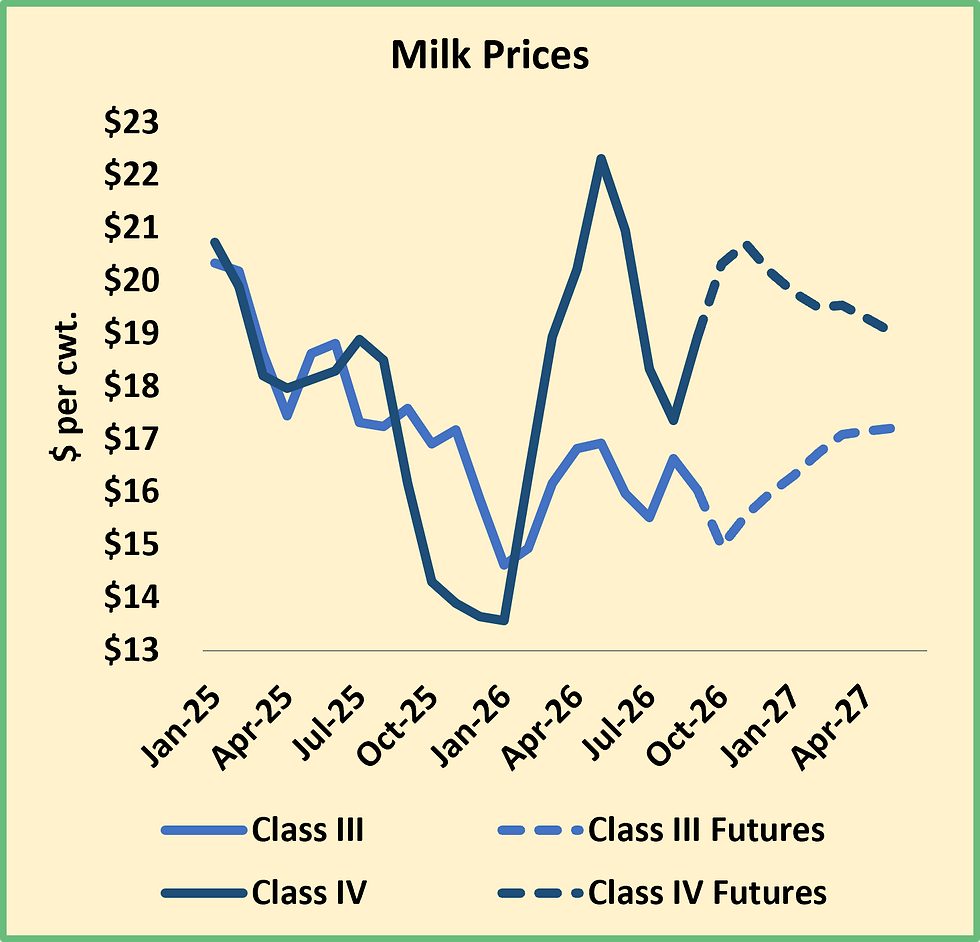
The weak cheese market dragged Class III values downward. The October contract settled at $14.96 per cwt., down 27ȼ since last Friday and well below dairy producers’ breakevens. Double-digit losses pushed the November and December contracts below $16. 2027 contracts promise Class III revenues in the high-$16s and low-$17s. Class IV futures just kept climbing, propelled by the impressive strength in NDM. Most contracts gained roughly 60ȼ this week. All Q4 contracts closed north of the $20 mark, while 2027 futures forecast Class IV milk in the $19s.
For dairy producers who enjoy Class I, II, or IV revenue, that’s more than enough to offset rising feed, energy, and interest costs. Beef revenues, while down sharply from the summer peak, are still helping to pad the bottom line. But producers who rely on Class III incomes are starting to struggle. Many have healthy balance sheets that will help them weather this downturn. However, there are signs of strain. Here and there, producers are offering herds for sale. Those who considered and then rejected the idea of retirement while margins were strong are giving it a second thought. Cattle values remain high, offering an easy exit ramp. But a trickle of sellouts is not enough to dampen U.S. milk production prospects. The dairy herd is massive and the industry continues to brace for more milk.
Grain Markets
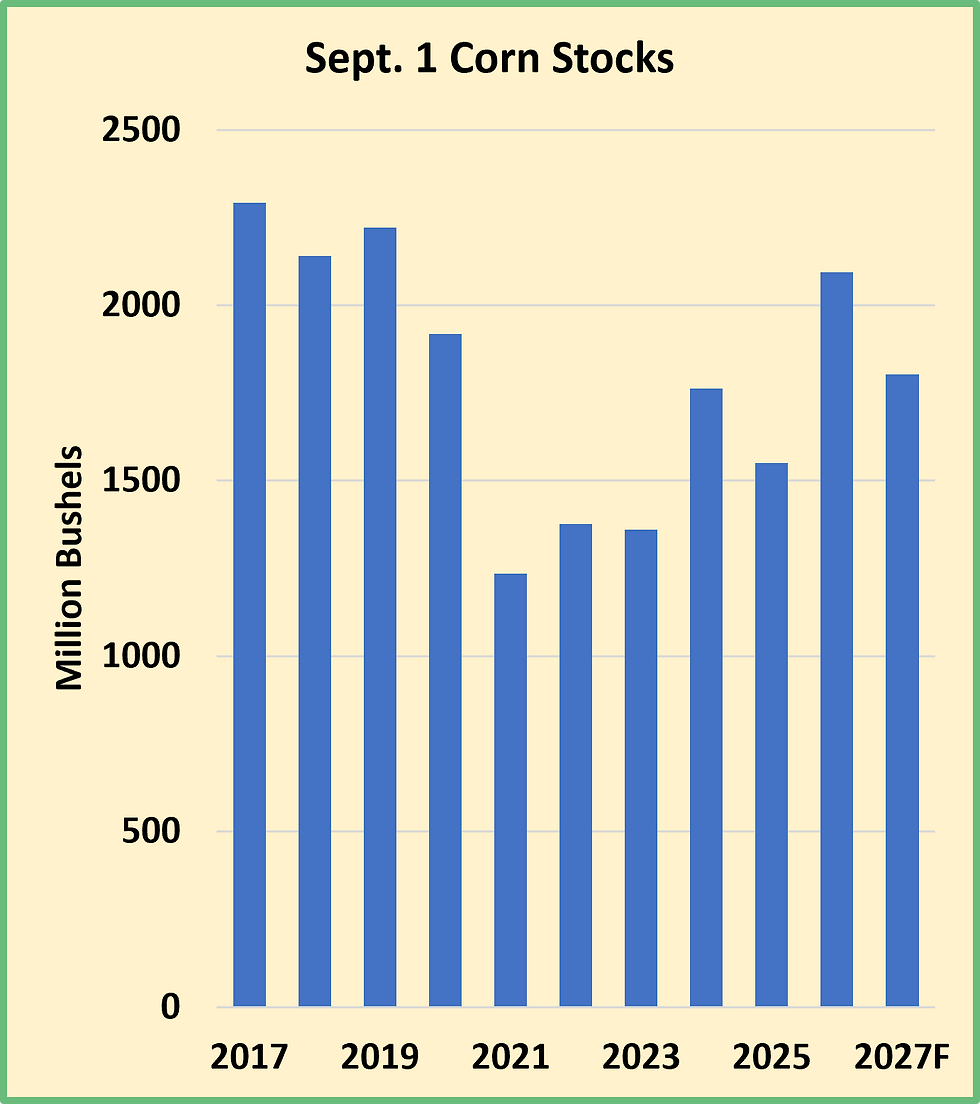
USDA offered dairy producers a little reprieve from high feed prices this week. The agency pegged September 1 corn stocks at 2.095 billion bushels, well above LaSalle Street’s expectations. Grain elevators are entering the 2026-27 crop year with greater inventories than anticipated, and the new data implies that corn demand in the 2025-26 crop year was 230 million bushels lower than previously thought. Last month, the corn market rallied to nearly $5.50 per bushel on fears that massive demand and tight stocks warranted higher prices. But now that some of those fears are allayed – for now – the market is in retreat. December corn closed today at $4.9725 per bushel, down 31.5ȼ since last Friday. The ink ran red in the soy complex as well. December soybean meal fell $23 this week to $347 per ton.

Comments