Milk, Dairy and Grain Market Commentary
By Sarina Sharp, Daily Dairy Report
Milk & Dairy Markets
There’s an unusual convergence in the dairy markets, with spot cheese, butter, and milk powder trading neck and neck in the $1.50s. All three products seemed pretty comfortable at these prices, and week-to-week changes were modest. CME spot butter slipped 0.25ȼ to $1.5125 per pound. Cheddar blocks fell 1.75ȼ to $1.555. Meanwhile, CME spot nonfat dry milk (NDM) climbed 1.75ȼ to $1.5775. The epitome of stability, CME spot whey powder inched up 0.25ȼ to 69.5ȼ.
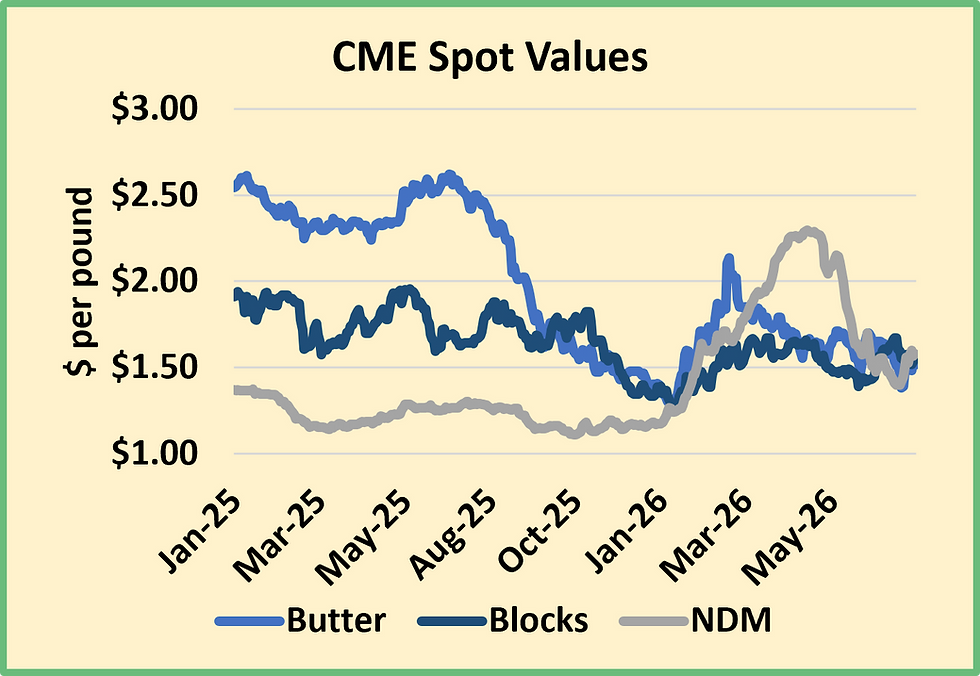
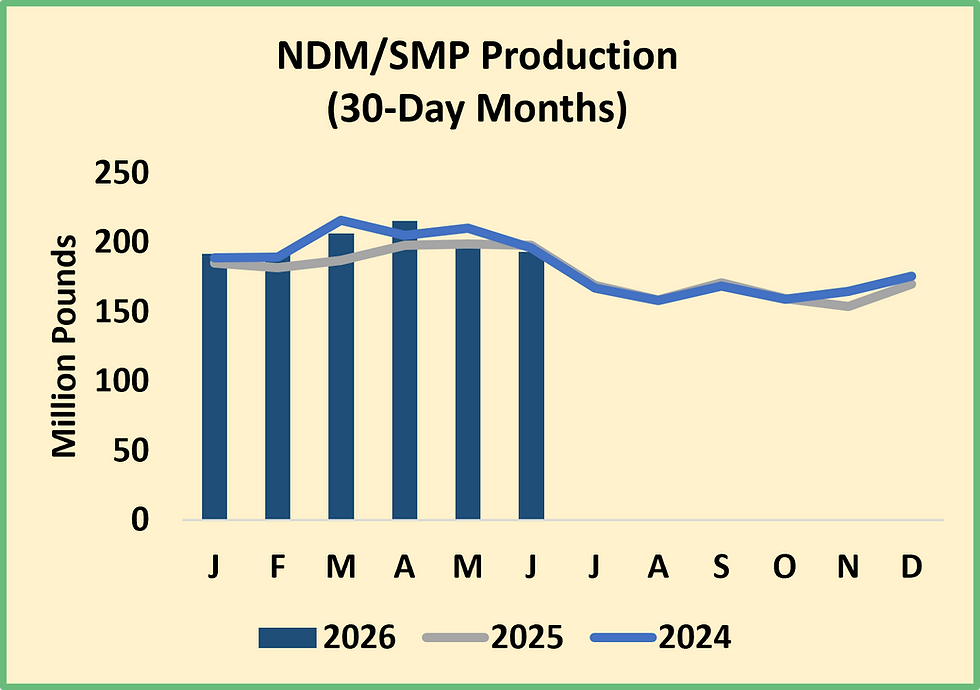
For NDM, values north of $1.50 are relatively lofty, but much easier to sustain than the spectacular spring spike above $2.00. The U.S. dairy industry continues to make more milk and more components, but other processors are lapping it up. In June, combined production of NDM and skim milk powder (SMP) slumped to 193.6 million pounds, down 2.4% year over year to the lowest tally for the month since 2013. Milk powder production surely accelerated in July as the Fairlife outage pushed balancing plants to run overtime. But now it’s August and milk is feeling tight. Class I processors are ramping up in anticipation of a surge in school milk orders. This week, spot milk ranged from $1 under to $5 over Class prices in the Central region, reflecting pockets of processor downtime and strong demand from most Class I, II and III manufacturers. Dryers in the Midwest and Southwest are running light. In contrast, milk powder output is strong on the West Coast. Milk is abundant in California despite the season.
The surge in U.S. milk powder prices in February through May depressed exports. Shipments abroad fell just shy of 106 million pounds in June, on par with daily average exports in May and the slowest export pace in nearly seven years. Low production volumes and product recalls pushed U.S. manufacturers to focus on the domestic market this spring. But now they are paying closer attention to international values. The NDM market got a little lift this week from a 1.2% increase in SMP prices at Tuesday’s Global Dairy Trade auction.
Cheese production continues to top year-ago volumes, and the product mix hints at poor domestic demand. Cheese output reached 1.23 billion pounds, up 1.1% from June 2025. Manufacturers made more Cheddar and less Mozzarella, confirming reports of tepid pizza sales. But, thankfully, exports thrived. Cheese shipments jumped to an all-time high of 142.4 million pounds, up 24% from last year’s record-setting volumes. U.S. cheese exports to Mexico notched a fresh high, and sales to South Korea and Japan remained strong. Exports are helping to prevent a glut of cheese in U.S. warehouses. But, with rising production and ho-hum domestic demand, prices must stay low enough to maintain this export sprint. If shipments slow to a jog, the U.S. will be awash in cheese.

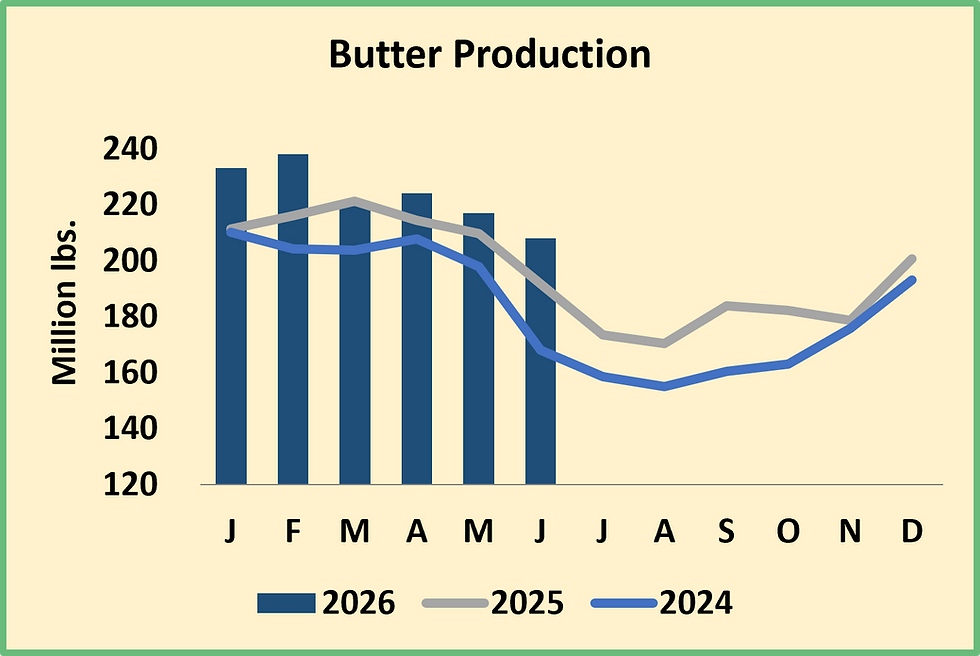
Exports also kept butter supplies in check. Merchants sent 28.75 million pounds of butter and milkfat offshore in June, 48% more than the year before. Cream exports jumped to their highest level since December 2016. But there was plenty of butter left over for the domestic market, as output soared to 208.2 million pounds in June, up 8.5% from the year before.
Whey manufacturers remain focused on high-protein products. In June, they made 8.8% more whey protein isolates (WPIs) and 4.7% more whey protein concentrates (WPCs) with at least 50% protein than they did in June 2025. But production of WPCs with less than 50% protein tumbled 30.7% year over year. There was plenty of whey left to be dried into powder. Production of whey powder for human consumption rose 7.2% compared to June 2025. Whey powder stocks expanded to a 26-month high. Whey powder exports easily outpaced the prior year, thanks to strong shipments to China.
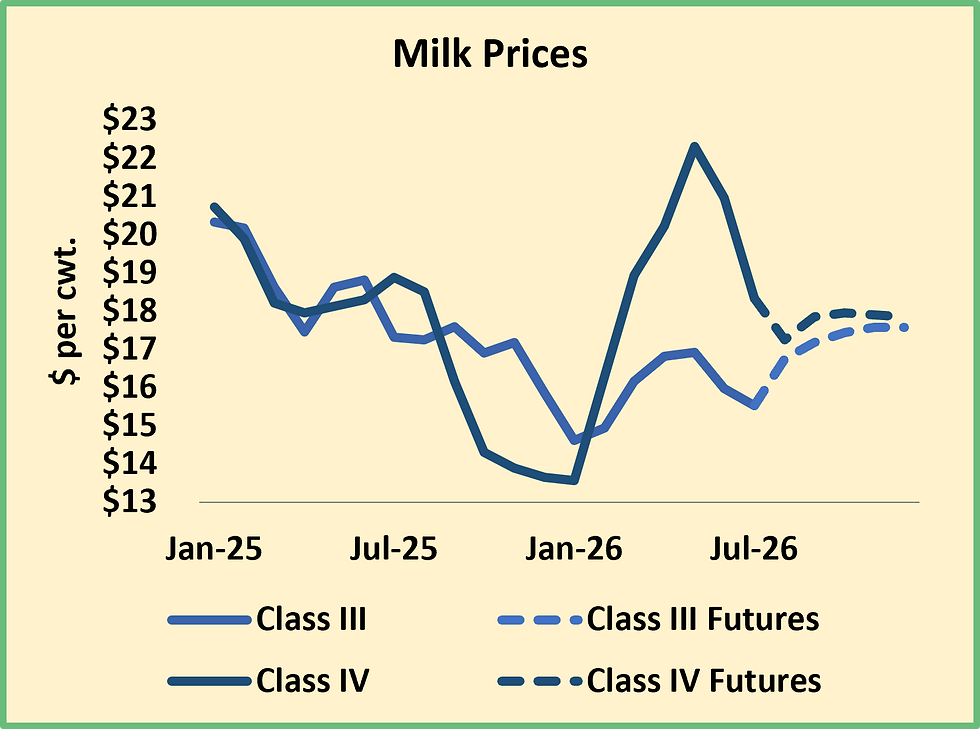
Dairy producers are bracing themselves for a small July milk check. USDA announced the July Class III price at $15.52 per cwt., down 46ȼ from the already disappointing June price. July Class IV settled at $18.34, down $2.62 from June. The futures promise higher Class III and lower Class IV values than the July settlements. This week, Class III futures retreated with losses ranging from 16 to 36ȼ. The August contract closed at $16.76. Class IV futures gained some ground. The August contract added a nickel and settled at $17.25. Most deferred contracts added roughly 30ȼ and settled in the high-$17s. Beef calf and cull cow revenues will help, but dairy producers are on a razor’s edge when it comes to profitability.
Grain Markets
Regular rains and a break from the heat dragged on crop values once again this week. This year’s harvest isn’t likely to top last year’s bumper crop; yields are expected to be the second-highest ever. But exports are booming and, with Russia and Ukraine attacking one another’s export infrastructure and drought in Europe, the U.S. may be called upon to supply a greater share of the world’s grain. December corn fell 2.5ȼ this week to $4.615 per bushel. Soybean meal futures fell $7.50 to $313.50 per ton.

Comments