Milk, Dairy and Grain Market Commentary
By Sarina Sharp, Daily Dairy Report
Milk & Dairy Markets
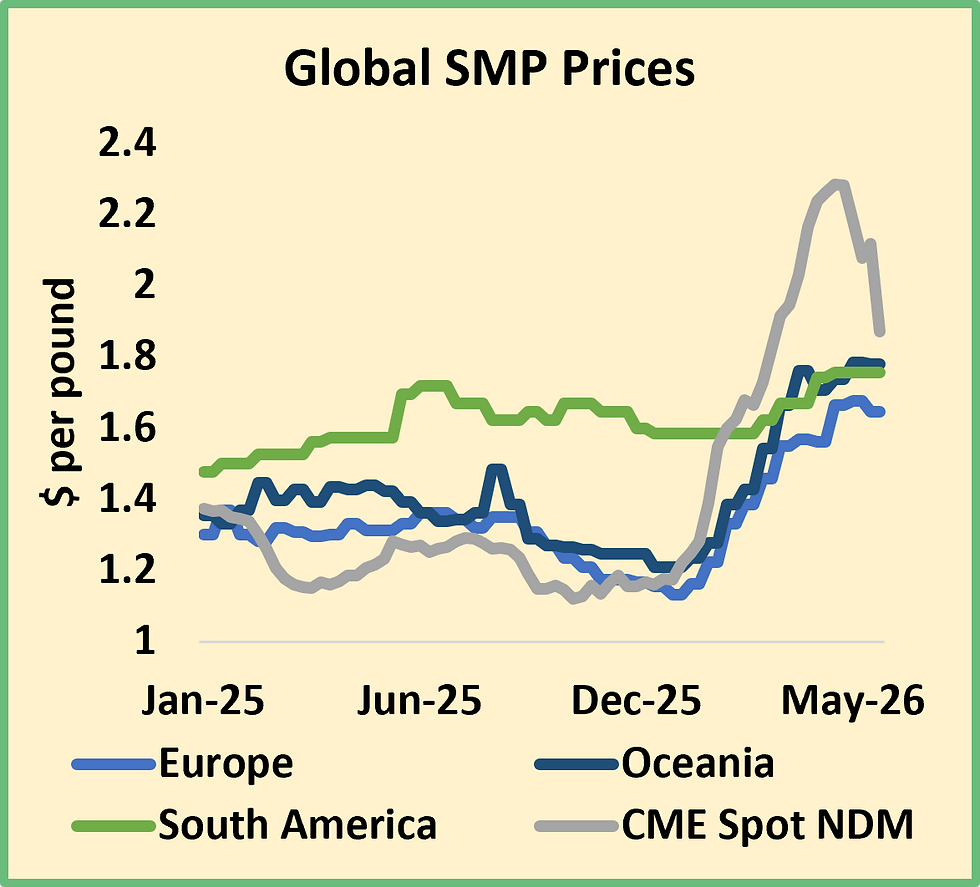
What goes up must come down, and the milk powder market is no exception to the laws of gravity. This week, CME spot nonfat dry milk (NDM) demonstrated Isaac Newton’s third law of motion, the one that describes equal and opposite reactions. Spot NDM dropped just as quickly anddramatically as it soared. It fell 26ȼ in five trading sessions to $1.785 per pound, a three-month low. U.S. milk powder exports held steady in April as merchants delivered on deals booked several months before, when U.S. milk powder was among the cheapest in the world. Export prospects are much dimmer going forward. Even after the selloff, U.S. milk powder commands a premium to international product, and foreign buyers are likely to look elsewhere.
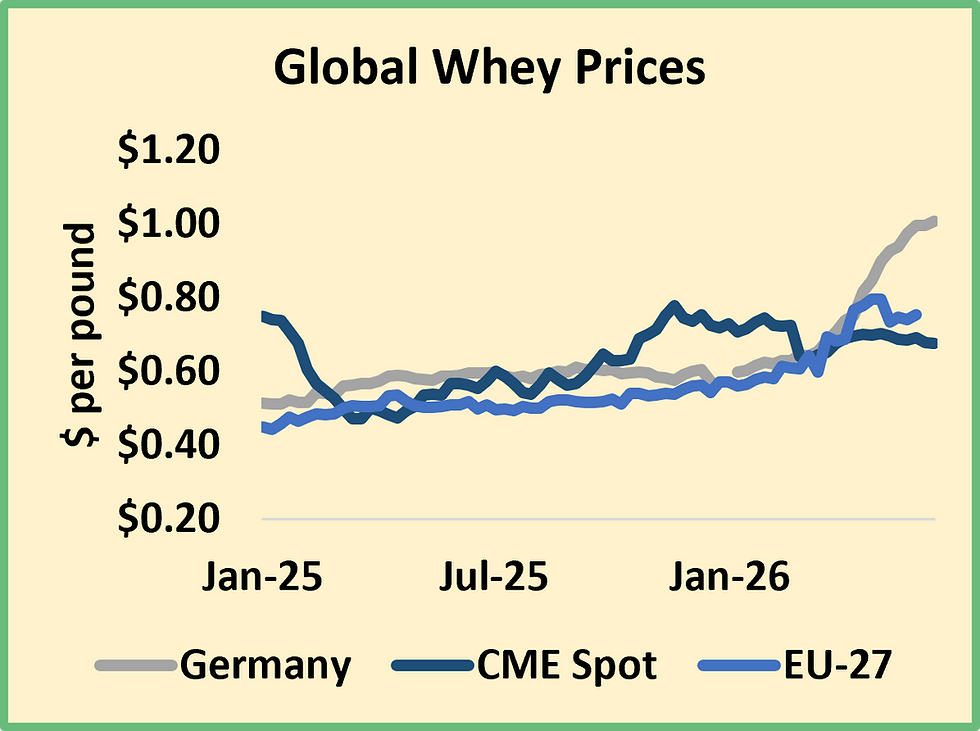
CME spot whey powder is holding steady in an exceptionally narrow range just south of 70ȼ. This week, the spot price inched up a penny to 68ȼ. Meanwhile, European whey prices have climbed straight upward since April, making U.S. whey look like a bargain. U.S. dry whey exports posted their second-largest monthly total on record in April, up 72% year over year. Strong demand from China has boosted whey exports all year, but going forward the U.S. is likely to gain marketshare around the globe. While U.S. exporters typically compete with their European peers, Europe is suddenly the destination of choice for U.S. whey product shipments.
U.S. cheese exports set a fresh monthly record in April, tipping the scales at 141.5 million pounds, up 29.9% from April 2025. U.S. cheese still looks like a bargain, and exports are expected to remain strong. That’s vital, because domestic cheese demand is lackluster and production is formidable. Cheese prices will have to stay low enough to maintain the edge in international markets. But there is room for a modest rebound from recent lows. This week CME spot Cheddar blocks climbed 1.5ȼ to $1.4875.

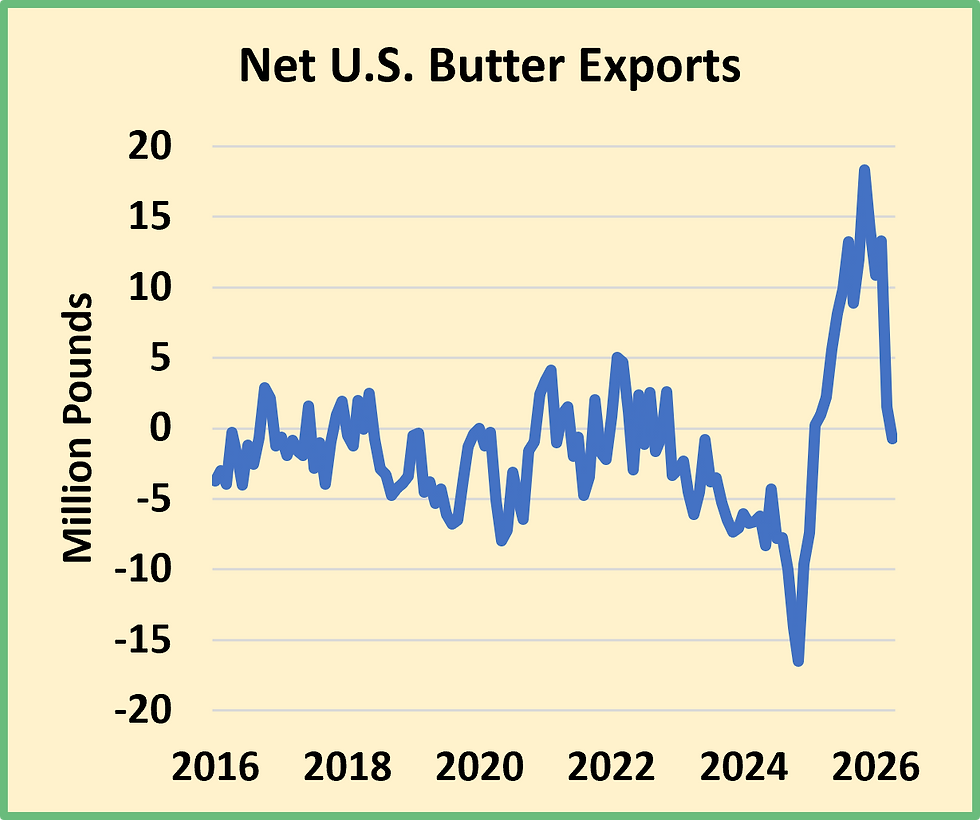
The butter market started strong but finished weak. CME spot butter fell 2.5ȼ to $1.6675 after a flurry of activity on LaSalle Street. Traders exchanged 161 carloads of butter, the highest weekly spot volume since October 2024. Sixty loads moved on Friday alone, the heaviest single-day volume since daily trading began 20 years ago. After some unexpected downtime, a major butter producer was forced to bid for product at the CME to meet its sales commitments. In a tight market, that might have pushed prices sharply higher. Instead, it gave other butter sellers the opportunity to move some product without pushing prices drastically lower. Domestic butter demand is excellent, and exports are big. But imports are also large. The U.S. is importing so much Kerrygold butter that net exports dropped to nearly zero in March, and the U.S. was a net butter importer in April.

The milk markets continued to deflate. Most Class III contracts lost between 20 and 30ȼ. June Class III dropped to $15.95 per cwt. Class IV contracts lost roughly a half-dollar, on average. The futures predict $20 milk in June, but much lower revenues ahead. The October contract fell to $17.94 this week.
Grain Markets
Crop prices dropped hard once again this week. USDA’s monthly supply and demand update contained no surprises, but it forced the trade to reckon with the hard reality of global crop supplies. Corn, soybean, and wheat prices rallied earlier this year, buoyed by concerns that dry weather in Brazil and drought in the U.S. Plains would reduce grain production. When crude oil prices jumped, speculative investors bid the corn market even higher on the assumption that rising fertilizer prices could reduce crop yields. The Trump-Xi trade summit further boosted the soy complex, as traders on LaSalle Street hoped the world’s largest soybean importer would step up its purchases of U.S. oilseeds. But one by one, those anxieties and hopes were quelled. Late-season rains revived Brazil’s second corn corp. While some fertilizer prices remain elevated, the cost of urea, the most common form of nitrogen fertilizer, dropped to its lowest price since early February. And traders finally believed Chinese officials who have consistently asserted that they would not buy any U.S. soybeans beyond those they already promised to purchase during previous trade discussions. Today’s prices reflect a more realistic assessment of demand for U.S. crops and a good start to the growing season. But there’s plenty of weather between now and harvest.
July corn futures dropped a nickel this week and plumbed life-of-contract lows. They settled at $4.13 per bushel. July soybeans dropped 9ȼ to $11.13. July soybean meal fell another $7.70 to $301.10 per ton.

A browser-based coloring session is handy when you want a quick creative break without installing anything. This page from PhotoColorify keeps the essentials close: a palette, fill and brush tools, and the ability to bring in your own line art. The lack of registration is a plus, and being able to save the result as a PNG or print it directly makes it easy to move from screen to paper. For parents or educators who need a low-friction activity that still feels polished, PhotoColorify's online coloring page is a solid choice.