Lots of Water Activity
There has been a flurry of recent activity related to water issues. On December 2, the federal Bureau of Reclamation released “Action 5” which are updated rules that will govern pumping water from the delta. The delta is the 1,150 square mile area located east of the Golden Gate Bridge where the great rivers that drain the Central Valley meet the salt water from the San Franciso Bay. This area is home to 500,000 acres of farmland and many sloughs and channels that contain important fisheries through which anadromous fish pass on their way from spawning grounds inland to the ocean where they spend adulthood. It is also the location where the major surface water delivery systems that serve millions of Californians and millions of acres of some of the most productive farmland on earth move water from the wetter region of northern California to the drier southern part of the state.
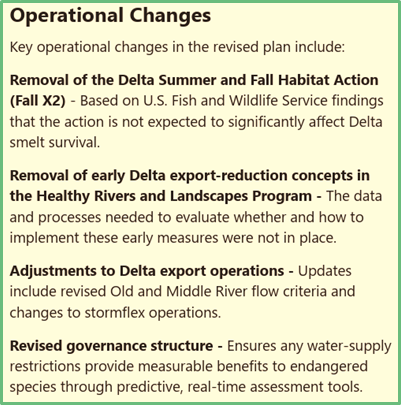
Balancing the needs of all of these important components is a job the federal and state governments have been struggling with for decades. As time has passed, there have been significant improvements in our scientific understanding of the relationships between river flows and the environment. It is not a static relationship and of course weather conditions are extremely variable. What Action 5 builds on is incorporating what we have learned into a more adaptable regulatory structure that allows the operators of the big water projects flexibility in balancing the legitimate needs of the environment with the real water supply needs of people and farms.
Also this week, Congressmen Adam Gray and Congressman Jim Costa introduced federal legislation to provide $4.4 billion in federal funding for California water infrastructure needs. A few months back, a number of Republican congressmen introduced a similar bill which would provide federal support for California water. Congressman Gray is also championing an Endangered Species Act (ESA) reform bill that if passed would bring some much needed balance to the ESA.
Recently the State Water Resources Control Board reissued a staff report on the long term operations of the Bay Delta Water Quality Control Plan. This foundational regulation has been due for an update for over a decade and continues to be delayed. But there does seem to be momentum behind taking a more balanced approach when and if the plan gets updated by the State Board.
The state of California today issued an updated Incidental Take Permit (ITP) for the State Water Project. This is the state’s version of the federal Action 5 regulation. Historically, the state deferred to the actions of the federal agencies on enforcement of the Endangered Species Act delta regulations, but in recent years political differences between the state and federal administrations have led the state to issue its own version of these regulations. Hopefully for the benefit of all of the various users depending on the delta, these two regulations are now more compatible and aligned.
Finally, what follows this piece are two important articles. The first one is about a new Westlands Water District economic report on the costs of reduced surface water supplies on the economy and jobs in their part of the Valley. The second article is a column by our friend Ed Ring addressing the huge impact of delta regulations on water supply and asking if this winter things will be different.
Comments